1. Introduction to Nabawi Holy Site (나바위 성지)
Nabawi Holy Site, located near the border of Nonsan and Iksan, is a profound historical landmark in Korea. This site holds immense significance as the very place where Saint Andrew Kim Taegon, the first native Korean Catholic priest, set foot back on his homeland in 1845. He landed secretly at Hwangsan Port near the Geumgang River after being ordained in Shanghai. This pivotal moment launched the formal spread of Catholicism in Korea. The original church, built on a scenic hill, was initially called “Hwasan Parish.” Its current name, Nabawi, comes from the large, flat rock (“Nabawi”) situated at the end of the hill’s ridge.
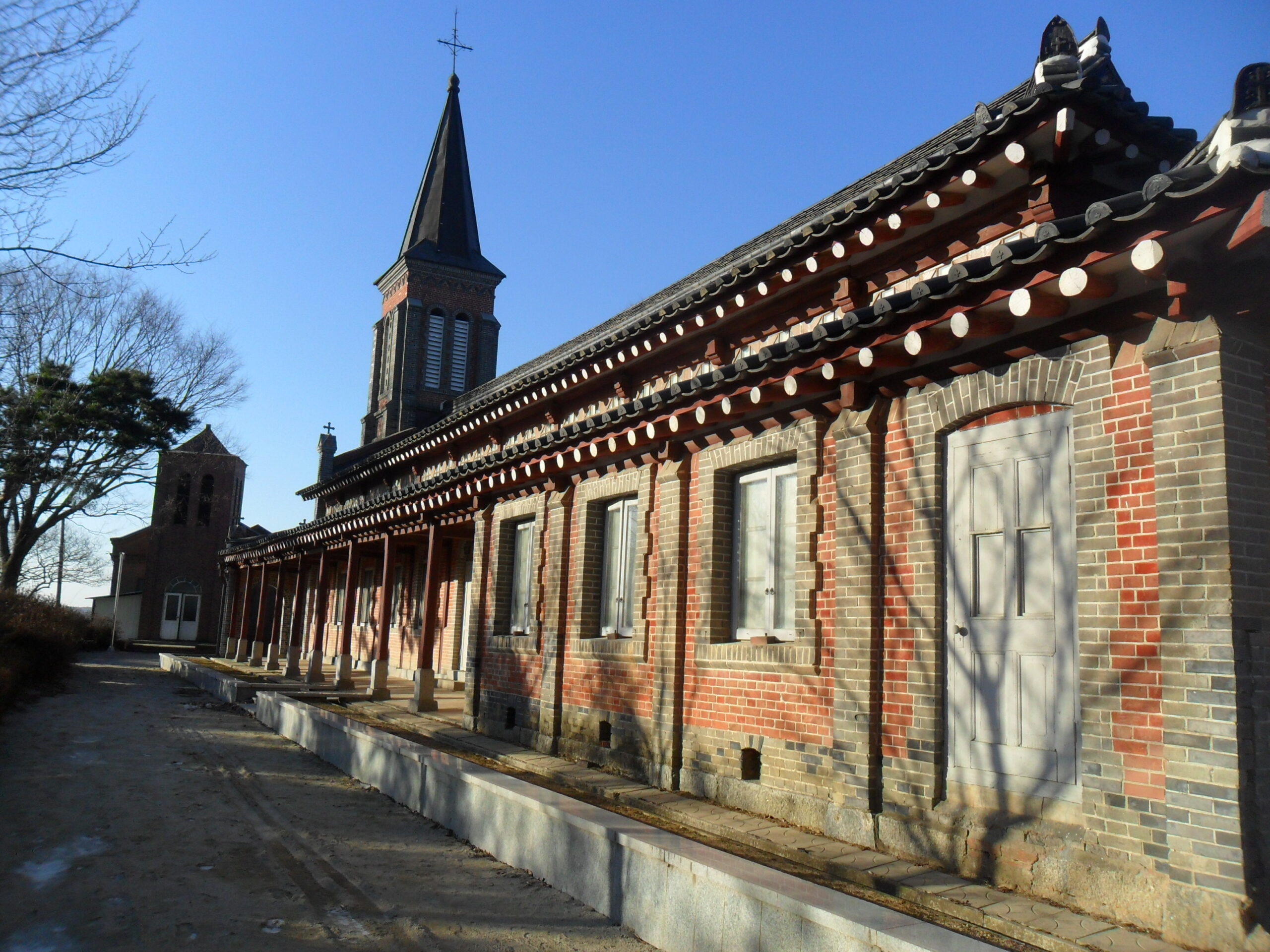
The centerpiece of this site is the beautiful Nabawi Church. Established as a parish in 1897, the church construction began in 1906 under Father Joseph Vermorel. The famous French priest Father Poisnel, who designed Seoul’s Myeongdong Cathedral, designed this church. What makes the Nabawi Church truly unique is its blended architectural style. It started as a pure Hanok (traditional Korean wooden structure) in 1906 but underwent several expansions until 1917. This resulted in a distinct Korean-Western hybrid architecture, beautifully mixing the traditional Korean roof and wooden structure with a Western-style brick façade and a Gothic bell tower added later. The church’s historical and architectural value led to its designation as Historic Site No. 318 in 1987. Inside the church, you can still see partitions separating the seating for men and women, reflecting traditional Korean customs of the time.
2. How to Get to Nabawi Holy Site (나바위 성지)
Nabawi Holy Site is located in Mangseong-myeon, Iksan-si, near the border with Nonsan, Chungcheongnam-do. Getting there is straightforward for visitors.
- By Train (Recommended): Take a KTX or general train to Iksan Station (익산역) or Ganggyeong Station (강경역). Ganggyeong Station is closer to the site. From either station, take a local bus or taxi directly to Nabawi. The taxi ride from Ganggyeong Station is short and convenient.
- By Express Bus: Take an express bus to the Iksan or Nonsan Bus Terminal. From the terminal, local buses or a taxi will take you to the holy site.
- By Car: Driving provides the most flexibility. Use a navigation app and search for “Nabawi Holy Site” (나바위성지). Parking is available on-site.
3. The Scenery of Nabawi Holy Site (나바위 성지)
The holy site sits on a gentle hill called Hwasan (華山), meaning “Flowery Mountain.” The scholar Wooam Song Si-yeol named the mountain for its exquisite natural beauty. The church and its surroundings offer a peaceful and inspiring atmosphere.
The architecture itself is a stunning highlight. The early Hanok structure, later reinforced with Western bricks and topped with a Gothic bell tower, represents a unique historical dialogue between two cultures. You can clearly see the wooden eaves and Korean roofing integrated seamlessly with the brick additions.
Walk up the hill behind the church. You will find the large, flat rock that gave the site its name, offering a great viewpoint. You also discover a monument marking the exact spot where Father Kim Taegon first landed after his long journey. The serenity of the Geumgang River flowing nearby adds to the picturesque and contemplative environment.


4. Map(Iksan Nabawi Holy Site)
5. Surrounding Information
After visiting the historic Nabawi Holy Site, explore the charming local area.
- Ganggyeong Jeotgal Market (강경 젓갈시장): Just a short distance away in Nonsan, Ganggyeong is famous for its salted seafood (jeotgal). This is Korea’s largest jeotgal market, offering a unique glimpse into traditional Korean food preservation. You can sample and buy many varieties. (Address/Location Hint: Ganggyeong-eup, Nonsan-si)
- Oksanseowon Confucian Academy (옥산서원): Located nearby, this historic academy provides a beautiful example of traditional Korean architecture and learning spaces. It is a peaceful spot to appreciate Korea’s scholarly past. (Location Hint: Mangseong-myeon, Iksan-si)
- Accommodation/Dining: For local flavor, try the small restaurants near the Ganggyeong market, specializing in fresh seafood and local Jeotgal dishes. For lodging, consider staying in hotels or motels in the nearby city centers of Iksan or Nonsan for greater convenience and selection.


Discover more from Creative Innovator in Korea
Subscribe to get the latest posts sent to your email.