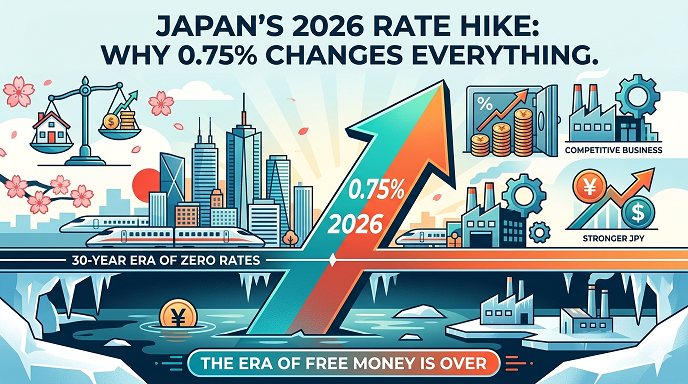
The End of a 30-Year Era
Japan is making a historic move. For three decades, the Bank of Japan kept interest rates at zero or even negative levels. Now, experts predict a shift to 0.75% by 2026. This is not just a small number. It marks the end of “Abnormal Japan” and the start of a new economic era.
Why 0.75% Matters to You
You might think 0.75% sounds low compared to the US or Europe. However, for Japan, this is a massive leap. This change signals that Japan has finally defeated 30 years of stagnation. The central bank now believes the economy is strong enough to handle “real” costs for borrowing money.
- The Big Signal: Money is no longer free in Japan.
- Normalizing Economy: Japan is returning to the global standard of finance.
The Impact on Daily Life and Households
How does this affect a regular family in Tokyo or an expat living in Japan?
1. The Cost of Borrowing Goes Up
Most Japanese homeowners use floating-rate mortgages. When the rate hits 0.75%, monthly payments will increase. This leaves less money for dining out or buying clothes. People who planned to buy a new car or home may wait.
2. Savings Finally Earn Interest
For 30 years, putting money in a Japanese bank was like hiding it under a mattress. You earned nothing. Now, for the first time in a generation, savers will see a return. This encourages people to save more, which can slow down immediate spending.
What This Means for Businesses
Companies must adapt to a world where debt has a price tag.
- Survival of the Fittest: Many “zombie companies” survived only because of cheap loans. Higher rates will force these businesses to become efficient or close down.
- Selective Investment: Big corporations will think twice before starting new projects. They will only invest in high-profit ideas. This makes the Japanese economy leaner and more competitive in the long run.
The Currency Game: Yen vs. Dollar

The Japanese Yen has been weak for a long time. This hike changes the game for travelers and importers.
- A Stronger Yen: Higher rates usually make a currency more attractive. We expect the Yen to gain strength against the Dollar.
- Cheaper Imports: A stronger Yen means lower prices for imported oil and food. This helps lower the cost of living for everyone in Japan.
- Export Challenges: Famous brands like Toyota or Sony might find it harder. A strong Yen makes their products more expensive for buyers in the US and Europe.

Global Ripple Effects: The “Carry Trade”
Japan’s low rates affected the whole world. Investors borrowed cheap Yen to buy assets in other countries. This is the famous “Yen Carry Trade.”
As Japan raises rates, that “cheap money” starts flowing back home. This shift can cause volatility in global stock markets. Investors everywhere are watching the Bank of Japan very closely. They know that when Japan moves, the world feels it.
Is This Good or Bad News?
The answer depends on who you are.
- For Savers: It is great news. Your money finally grows.
- For Borrowers: It is a challenge. You must manage your debt more carefully.
- For the Country: It is a healthy step. It shows that Japan is no longer “stuck” in the past.
Final Thoughts: Watch the Direction, Not the Number
Do not focus only on the 0.25% increase. Focus on the direction. Japan is walking away from the “Lost Decades.” We are witnessing a historic pivot that will reshape Asian markets and global trade.
If you have investments in Japan or plan to visit in 2026, keep a close eye on these rates. The era of free money is officially over.
Discover more from Creative Innovator in Korea
Subscribe to get the latest posts sent to your email.