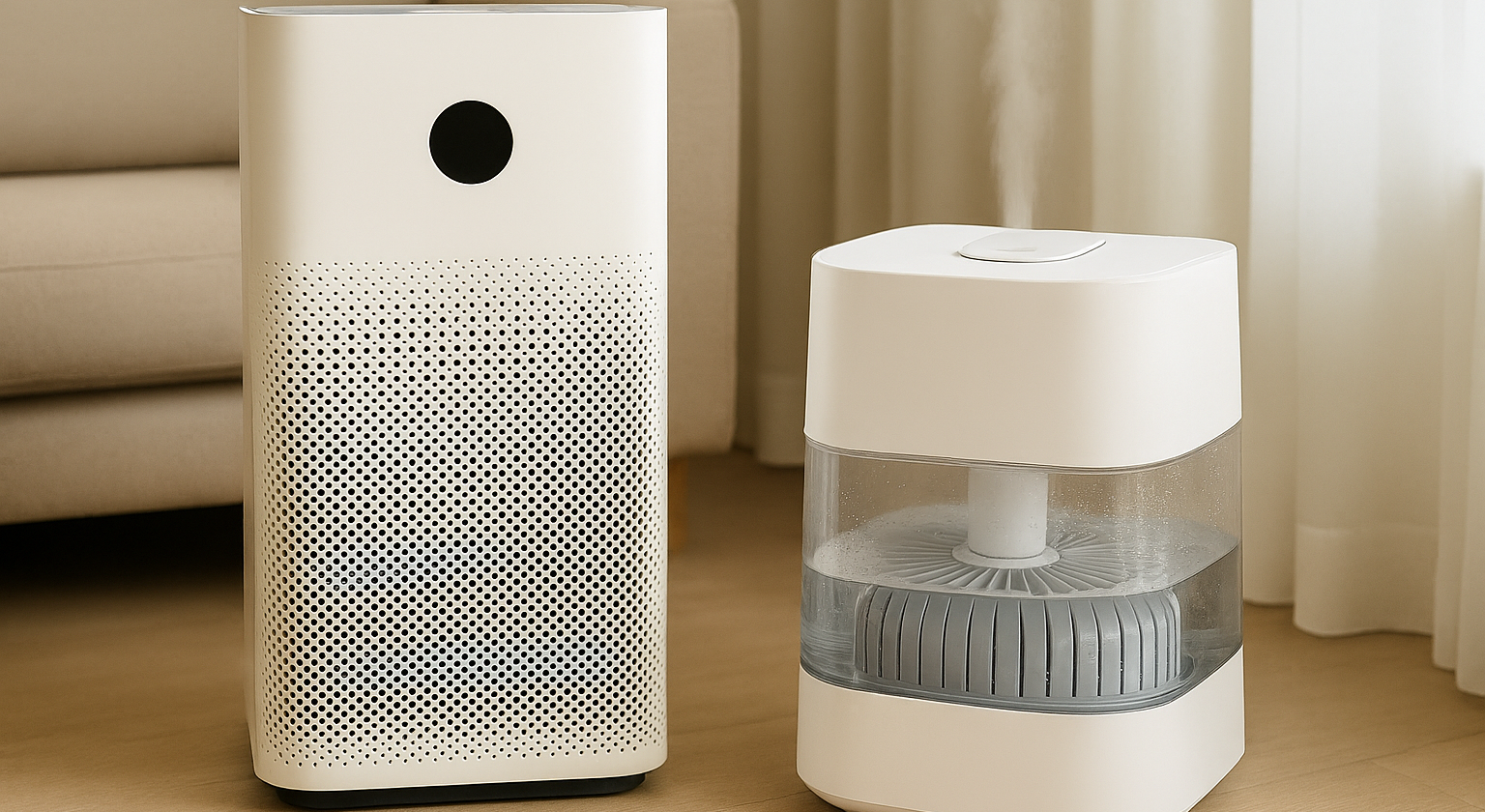
When the chilly, dry winter air arrives or fine dust clouds the horizon, we all look for ways to make our indoor environment safer. Most people immediately think of an Air Purifier. However, have you heard of an Air Washer?

While both machines aim to provide “clean air,” they operate on completely different principles. Choosing the wrong one might leave your throat dry or your air still dusty. Today, we will break down the mechanics, pros, and cons of each to help you make the smartest choice for your home.
1. Air Washer: Mimicking Nature’s Rain 🌧️
An air washer uses the power of water to purify the air. Think about how the air feels incredibly fresh after a rainstorm. An air washer recreates this natural phenomenon indoors.
How It Works: Natural Evaporation
Inside the machine, a series of discs or a “water wall” rotates through a reservoir. A fan draws in dirty indoor air, and as the air passes over the wet discs, pollutants like large dust particles and pollen get trapped in the water. The machine then releases clean, humidified air back into the room.
- Natural Humidification: Unlike ultrasonic humidifiers that spray mist, air washers use “natural evaporation.” This maintains a comfortable humidity level without making surfaces damp.
- Static and Dust Removal: Increasing humidity helps drop floating dust to the floor and eliminates annoying static electricity.
- Low Noise: These units generally operate more quietly than high-powered filter systems.
The Trade-off: Because they use water, you must clean them frequently to prevent bacterial growth. Also, while they catch large particles, they aren’t as effective against microscopic fine dust as HEPA filters.
2. Air Purifier: The Power of Multi-Stage Filtration 🛡️
If an air washer is like a rainstorm, an air purifier is like a high-tech laboratory mask for your room. It relies on physical filters to trap contaminants.
How It Works: The HEPA Shield
Air purifiers suck in air using a powerful fan and push it through several layers:
- Pre-filter: Catches hair and large dust.
- Carbon Filter: Absorbs odors and harmful gases.
- HEPA Filter: This is the heart of the machine, trapping 99.97% of microscopic particles, including ultra-fine dust and allergens.
- Superior Purification: If you suffer from allergies, asthma, or live in a high-pollution area, the HEPA filter is your best defense.
- Customizable Defense: You can find models specifically designed to target pet dander, smoke, or even viruses.
The Trade-off: Air purifiers do not add moisture to the air. In fact, moving dry air can sometimes make a room feel even drier. You also need to factor in the recurring cost of replacing filters every 6 to 12 months.
3. Quick Comparison: Air Washer vs. Air Purifier ⚖️
| Feature | Air Washer | Air Purifier |
| Primary Goal | Humidification + Basic Cleaning | Intensive Air Purification |
| Method | Water-based Adsorption | Filter-based Filtration |
| Fine Dust Removal | Effective for larger particles | Highly Effective (HEPA) |
| Humidification | Included (Natural Evaporation) | None (unless hybrid) |
| Maintenance | Frequent cleaning of water tank | Periodic filter replacement |
| Best For | Dry throats and static issues | Allergies and fine dust areas |
4. Which One Suits Your Lifestyle? 🏠
Choosing between the two depends entirely on your environment and health priorities.
Choose an Air Washer if…
You live in a very dry climate and often wake up with a scratchy throat or dry skin. If you want a 2-in-1 solution that provides gentle humidity and basic dust removal without the risk of “white dust” from traditional humidifiers, this is for you. Just remember: You must be diligent about washing the water tank.
Choose an Air Purifier if…
Your main concern is air quality, not humidity. If you have pets, live near a busy road, or suffer from seasonal allergies, the HEPA filter is non-negotiable. It provides the strongest protection against microscopic threats.
The Hybrid Solution
Today, many brands offer “2-in-1 Hybrid” models. These combine HEPA filtration with a humidifying function. These are excellent space-savers but require the most maintenance, as you have both filters to change and a water tank to scrub.
✅ Final Thought for Your Health
Clean air is a pillar of wellness. Before you buy, check the CADR (Clean Air Delivery Rate) for purifiers or the humidification capacity for air washers. Ensure the device is the right size for your room to get the best results.


Discover more from Creative Innovator in Korea
Subscribe to get the latest posts sent to your email.