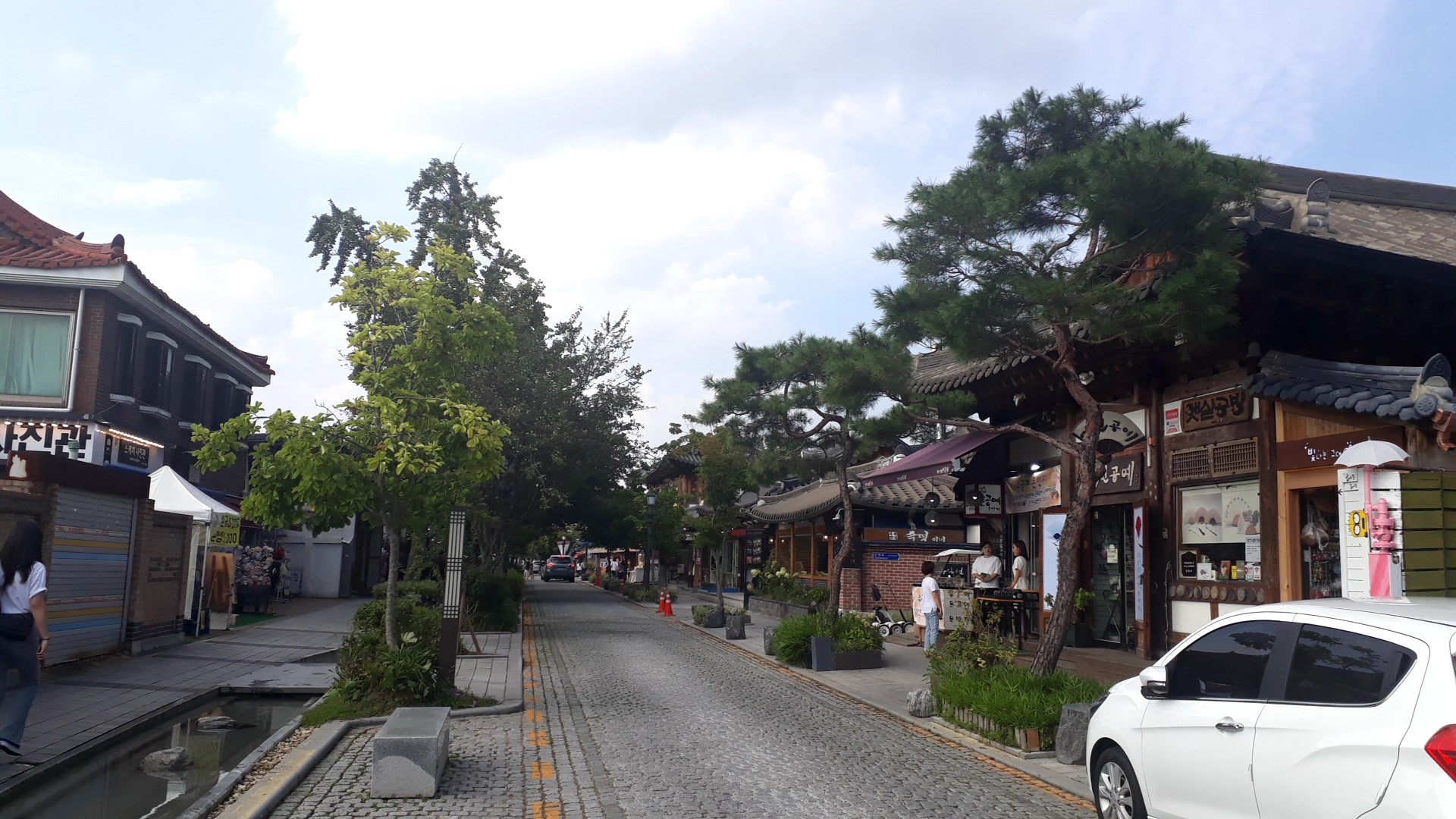
Welcome to Jeonju, the spiritual capital of Korea! If you want to experience the real soul of Korean tradition, Jeonju Hanok Village is your perfect destination.
1. Introduction to Jeonju Hanok Village
Jeonju Hanok Village is the largest traditional village in South Korea. It features over 700 beautiful Hanok houses right in the heart of the city. These houses represent the unique residential culture of modern Korea since 1910.
The true beauty of a Hanok lies in its roof. The edges of the roof curve slightly toward the sky. This creates a graceful and welcoming silhouette. Inside, you will find a clever heating system called Ondol. Fire from an outside fireplace warms the stone floor. This keeps the room cool in summer and cozy in winter.
You can visit over 20 cultural facilities here. Walk along Hyanggyo-gil or Gyeonggijeon-gil to see charming alleys. At night, the village transforms. Soft lanterns and wall lights create a magical atmosphere. You can also explore trendy spots like Jaman Mural Village and the Youth Mall nearby.
2. How to Get to Jeonju Hanok Village
Getting to Jeonju from Seoul is very easy. Most travelers prefer the KTX high-speed train. It takes about 1 hour and 40 minutes from Seoul Station or Yongsan Station.
Once you arrive at Jeonju Station, take a taxi or a local bus. A taxi ride takes about 15 minutes. If you enjoy road trips, express buses depart frequently from the Seoul Central City Terminal. The bus ride takes about 2 hours and 40 minutes. The village is very pedestrian-friendly, so bring comfortable walking shoes!
3. The Scenery of Jeonju Hanok Village
The village offers a stunning mix of history and nature. You will see people wearing colorful Hanbok (traditional clothing) everywhere. The wooden structures and tiled roofs blend perfectly with the surrounding trees. In autumn, the giant ginkgo trees turn bright gold. In winter, white snow covers the dark roof tiles beautifully. It is a paradise for photographers and history lovers alike.


4. Map
The village covers a large area of Pungnam-dong and Gyo-dong. You can find free maps at the Tourist Information Center near the main entrance. Most major landmarks are within walking distance of each other.
https://maps.app.goo.gl/FWMeBSkNmmj9kqBN6
5. Surrounding Information
Top Attractions
- Gyeonggijeon Shrine: Built in 1410 to hold the portrait of King Taejo. Many famous Korean dramas use this beautiful forest and shrine as a filming location.
- Admission: 3,000 KRW (Adults) / 2,000 KRW (Youth)
- Hours: 09:00 – 19:00 (Closes earlier in winter)
- Jeondong Cathedral: This is one of the most beautiful churches in Asia. It features Romanesque and Byzantine architecture. It sits on a historic site near the village entrance.
- Admission: Free
- Hours: 09:00 – 17:00 (Except during Mass)
Where to Stay & Eat
- Jeonju Hanok Living Experience Center: Stay in a traditional room and sleep on a warm Ondol floor. They serve authentic Korean meals in high-quality brassware (Napcheong Yugi).
- Contact: +82-63-287-6300
- Gajok Hoegwan (Famous Restaurant): You cannot leave Jeonju without trying Jeonju Bibimbap. This restaurant is famous for its rich flavors and fresh ingredients.
- Contact: +82-63-284-0982
- Lahan Hotel Jeonju: If you prefer modern luxury, this hotel offers a great view of the entire Hanok Village from its rooms.
- Contact: +82-63-232-7000
#Jeonju #HanokVillage #KoreaTravel #VisitKorea #TraditionalKorea #Bibimbap #Gyeonggijeon #JeonjuCathedral #Ondol #TravelBlog #SeoulToJeonju #KoreanCulture #HanbokExperience #AsianArchitecture #JeonjuTrip
Discover more from Creative Innovator in Korea
Subscribe to get the latest posts sent to your email.